

The Performance Gap: Why High-Performance Buildings Still Underperform


An article in USGlass Magazine by Helen Sanders
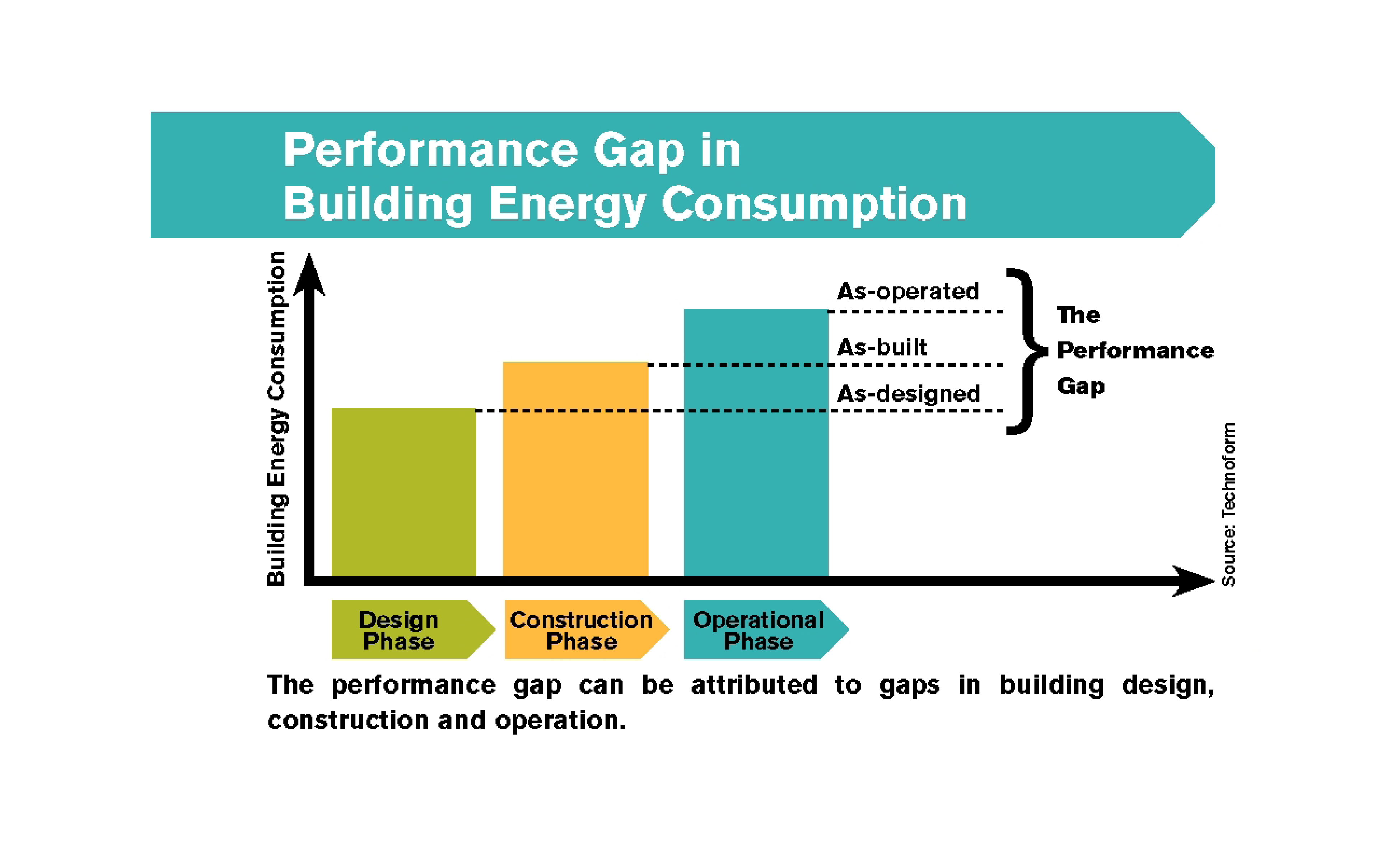
The building performance gap is not just an American problem—it is a problem reported across the globe. It is the recognition that as-built and operated energy performance does not live up to as-designed building performance.
Several causes have been identified, some of which can be influenced positively by our industry.
Design Phase
Predicted energy performance can be flawed because of inaccurate inputs and assumptions. For example, if center-of-glass (COG) U-factors are used in simulations instead of full fenestration assembly values, energy use is underestimated. It is critical that design teams understand the difference, and the values they are provided are clearly defined as full assembly or COG.
Using fenestration U-factor and solar heat gain coefficient values at the NFRC standard size and configuration can also reduce simulation precision. While certified performance at NFRC standard size is required for code compliance, project-size-specific values should be used for energy simulations.
Historically, U.S. model codes have ignored thermal bridging at interfaces and attachments. Heat conduction across these areas is assumed to be zero, despite significant heat loss. Only the latest versions (which have yet to be widely adopted) have begun to address this issue. BC Hydro’s Building Envelope Thermal Bridging Guide provides details and thermal performance for façade assemblies and interfaces.
Spandrel thermal performance is also systematically overestimated because the current calculation methods do not fully account for three-dimensional heat flows.
Construction Phase
The construction process has insufficient quality control to deliver the performance. This often can be due to poor air and water barrier installation that causes a lack of continuity or inadequate interface detailing in the design phase, resulting in higher air leakage and energy usage. Interfaces often fall through the cracks between different contractors’ scopes of work.
Using fenestration products without full NFRC performance certification, and confirmation that the installed product performance matches what’s specified, can also add to performance gap risk.
Operations Phase
Occupants can impact the energy performance of buildings by increasing plug loads over prediction. They can also override HVAC set points, disable lighting controls and use shading unexpectedly to adjust their comfort—especially near the façade. A focus on comfort in façade design could mitigate this.
Building systems have also become more complex. The skill sets needed to optimize today’s buildings are much higher than in the past, often requiring trained engineers who are not always in place.